1. What is your accuracy envelope, and what is it referenced to?
An accuracy percentage needs a stated basis. Ask what was checked, which independent references were used, how the checks were distributed and what the result says about the volume being reported.
Surface-position accuracy, volume agreement and book-to-physical variance are different measures. A weighbridge comparison also depends on density, material movements and the reporting cut-off; it should not be treated as a direct check of surface geometry alone.
2. How do you reconcile volume to tonnage?
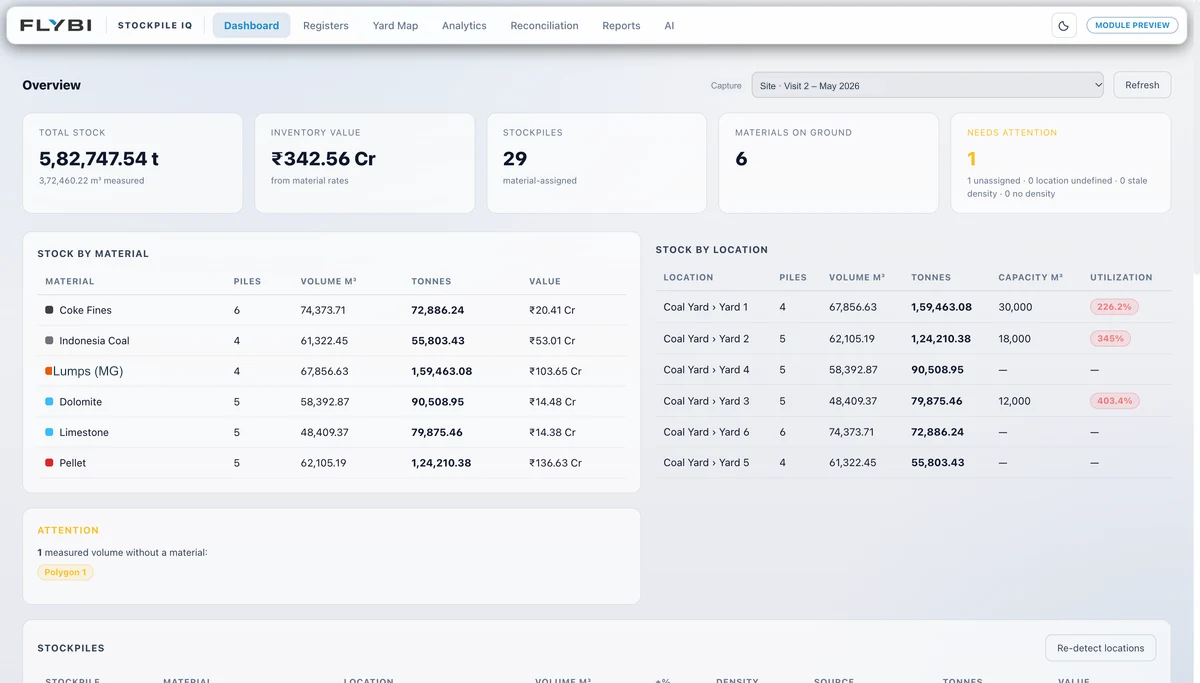
Volume is measured in cubic metres. Estimated tonnage adds an applicable bulk-density value in tonnes per cubic metre. Ask where that value came from, how material and moisture conditions were considered and which stock it represents.
Keep the density source and its date alongside the result. If a constant is used across periods, the team should be able to explain why it remains appropriate and how changes are reviewed.
3. How are the pile boundary and reference base defined?
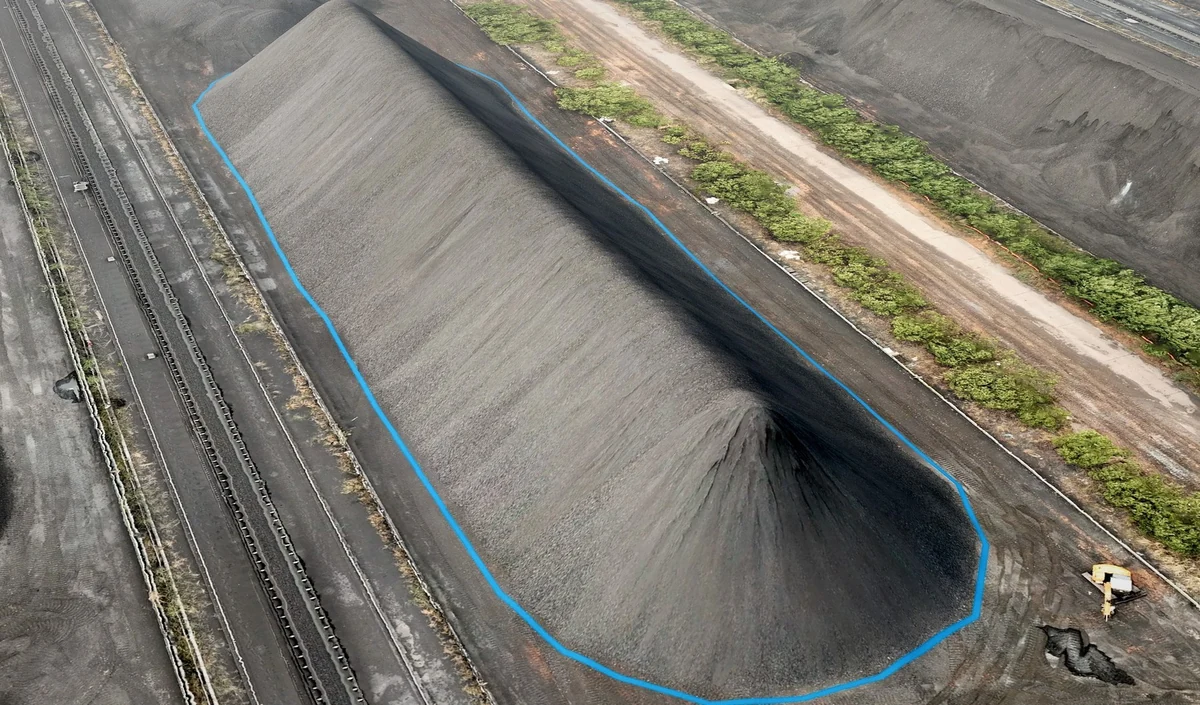
The pile boundary defines the area being measured. The reference base defines the lower surface used in the volume calculation. They are connected, but they are not the same thing.
Ask how both were established and whether they remain consistent across reporting periods. A changed base can change the calculated volume even when the visible pile surface has not changed. Keep that decision in the record.
4. Where is the weighbridge reconciliation table?
Where reconciliation is part of the scope, align the opening stock, recorded receipts, issues and other relevant adjustments with the same period and capture cut-off. Compare the expected closing stock with the physical estimate on an agreed material and density basis.
A residual points to a question for investigation. Timing, movements, measurement assumptions, material conditions and actual losses can all affect it. Agree the available source records and the review threshold before the measurement cycle.
5. If I remeasure the same pile the same day with a different crew, what do I get?
A useful repeatability check starts with an unchanged pile and compatible conditions. Agree whether the test repeats the field capture, the processing, the boundary selection or the whole workflow.
Compare the outputs against a predefined acceptance method and investigate differences. Repeatability is one part of the evidence; two matching results can still share an incorrect base or density assumption.
The close
A useful measurement regime makes its assumptions, checks and exceptions visible. It gives finance and operations a common basis for investigating differences and deciding whether more evidence is needed.
It does not guarantee an audit opinion, a financing outcome or a particular tolerance. Agree those acceptance requirements with the relevant reviewers before the measurement programme begins.
From understanding to action
Bring the question to your site.
Tell us what you need to measure, understand or review. We can help define the next step.