
The set-up
Consider an illustrative 500,000-tonne inventory valued at ₹6,000 per tonne. Assume, solely for this example, that a better measurement programme narrows the uncertainty envelope by 3.5 percentage points. These are round scenario inputs, not a statement about any client, sensor or capture method.
The variance gap
On these assumptions, 500,000 × 3.5% equals 17,500 tonnes. At ₹6,000 per tonne, that is ₹10.5 crore of inventory value within the difference between the two assumed uncertainty envelopes.
That is not ₹10.5 crore of cash saved. It is not an annual benefit, and it cannot be added across monthly cycles as though the same inventory were newly recovered each time. The calculation describes exposure under a scenario, not realised return.
What "uncertainty" means on the balance sheet
Book-to-physical review: a documented measurement basis helps a team investigate why physical estimates and records differ. Transfers and cut-offs: a clear capture time and material-movement record make comparisons more interpretable. Operating decisions: better evidence can help the team understand where stock is held and what requires investigation.
The accounting treatment, valuation and any financing benefit depend on the company’s circumstances and professional review. A smaller measurement uncertainty does not by itself establish a financial gain.
The cost side
Build the cost case from the actual proposed scope: mobilisation, control, field capture, processing, quality review, access and repeat cadence. Add the client effort required for density inputs, inventory cut-offs and reconciliation. Obtain a project quotation; a generic price per flight is a weak basis for the decision.
Then compare programme cost with specific benefits that can be measured. Examples include time spent preparing the inventory review, repeat-capture effort and discrepancies resolved with evidence. Keep expected benefit separate from a demonstrated outcome.
What killed the argument historically
A measurement programme is difficult to adopt when the result cannot be checked, its reference base changes between visits or its timing cannot be reconciled with site movements. Procurement should ask for the measurement basis, the acceptance checks and the proposed reporting workflow before choosing a supplier.
Access permissions, weather, operational windows and data availability also affect whether a repeat programme works. Treat them as part of the scope, not as problems that appear after the purchase order.
The operational value alongside the number
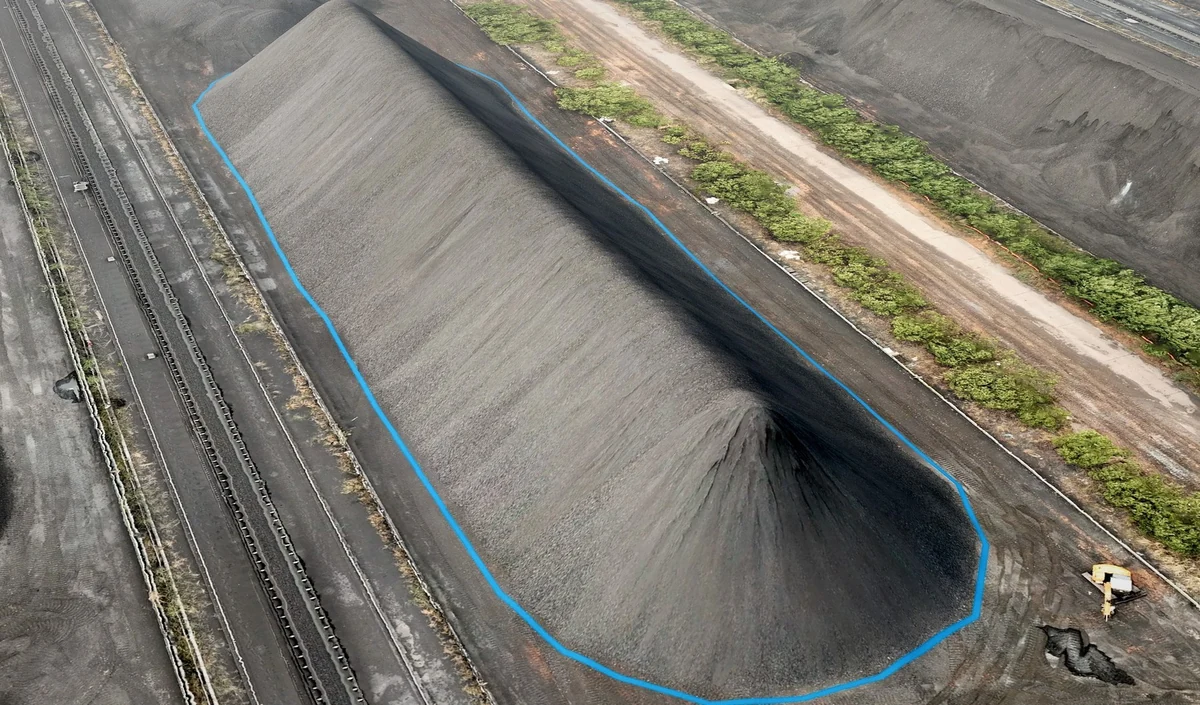
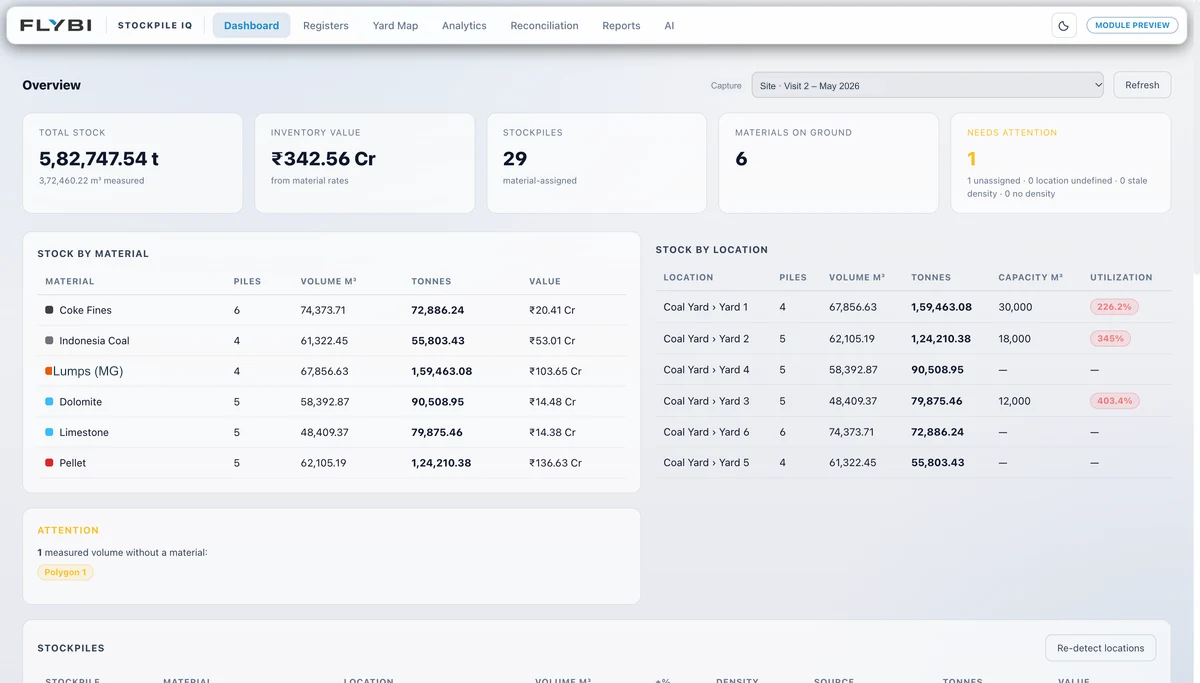
The same measurement programme can provide useful spatial context alongside the inventory result: pile location, surface shape and differences between compatible visits. Agree which outputs the team needs and how they will be used. Additional analysis, software access and integrations should be explicitly included in the scope rather than assumed to be free.
The strongest business case starts with a real decision and a way to measure improvement. It does not begin with an attractive percentage.
From understanding to action
Bring the question to your site.
Tell us what you need to measure, understand or review. We can help define the next step.