The blast window is not what you think it is.
Our proposal said "weekly overflight, Monday morning." The site's blast calendar said Monday at 11:00 is when the SW highwall comes down. Our flight window was 10:30–11:30. We learned this on day two, from a ground-crew foreman, not from the mine's own GIS team — because no one had ever written the blast schedule down in a form that crossed departments. We shifted to 06:10 Tuesday, before the first shift changeover. The lesson was to confirm the operating window across the relevant teams before each flight.
Haul-road condition is a mapping priority, not a nuisance.
We were there to map the pit. The mine manager wanted to know which haul road was killing his tyres. Point cloud ingestion was easy; the lesson was that the project buyer and the data user are often different people, and the scope should follow the user.
The dust doesn't stop because we booked a flight.
Airborne dust affected the first capture. The response was to coordinate the flight window with the water-tanker cycle and shift changeover. Field scheduling and image processing solve different problems: reliable information has to be captured before it can be processed.
Photos beat tickets.
A located photograph gives an engineering team something concrete to review: where the observation sits, what was visible and what needs a closer look. That is the value of connecting imagery to a site model. The finding still needs an owner, an assessment and a place in the team’s maintenance process.
The CFO wants the ledger, not the map.
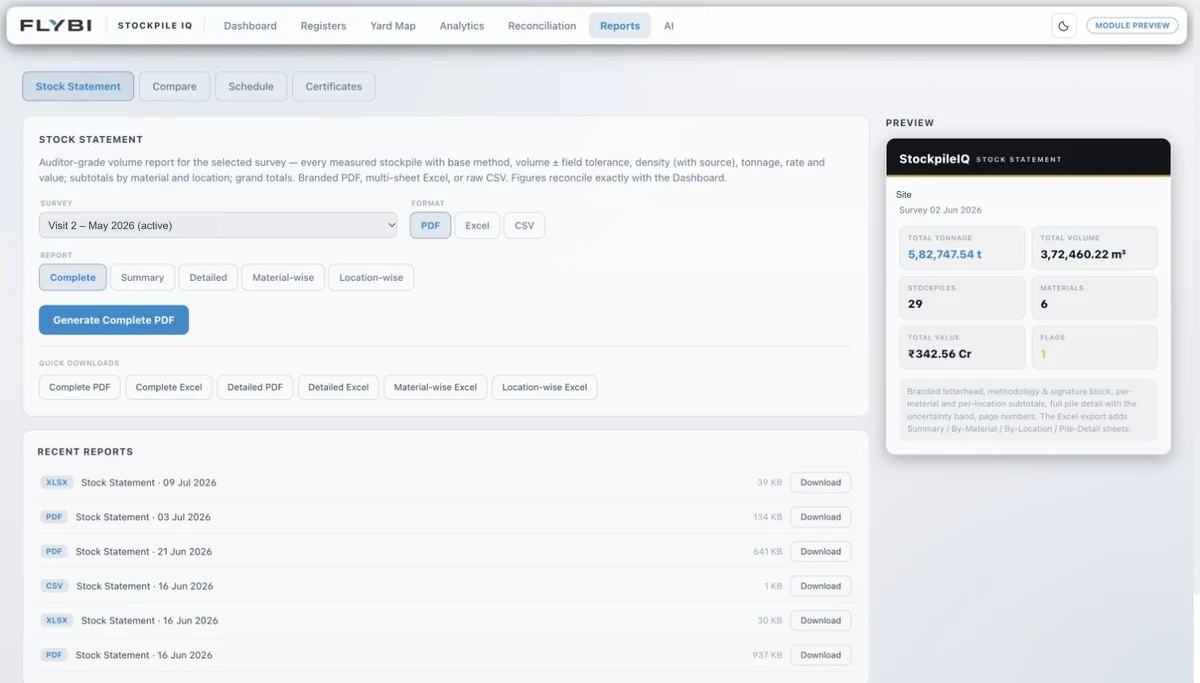
We came in thinking the mine manager was the buyer. By week four, the CFO had joined our weekly review. She didn't want to see the 3D pit. She wanted the weighbridge-reconciled stockpile ledger. That became the new flagship deliverable — and the one that justified the monthly retainer.
The scope writes itself after week two.
The first delivery often reveals which information the site team will actually use. Build a review point into the programme, then agree any change in outputs, cost or responsibilities. The scope can become more useful without becoming ambiguous.
From understanding to action
Bring the question to your site.
Tell us what you need to measure, understand or review. We can help define the next step.