The problem with an isolated capture
A single capture answers a question at a point in time. Its value can diminish if the model, measurements and quality records become difficult to find or interpret after delivery.
The opportunity is to make the next visit easier to compare with the last. That requires agreed identifiers, compatible references, clear processing records and a place for the receiving team to work with the information.
The three parts of a connected workflow
Three parts of the workflow matter.
Context that travels with the evidence. Keep the site, capture date, reference system and applicable checks with the output. Records from different periods should be comparable only where their basis supports comparison.
Processing that can be explained. Document the inputs, configuration and versions behind a result. A reproducible method makes it easier to investigate a discrepancy and understand the effect of a controlled change.
A delivery experience people use. Models, measurements and reports should be accessible to their intended reviewers. Software is useful when it reduces the effort of finding and understanding the relevant evidence.
Where lasting value comes from
The lasting value comes from how these parts work together. An image viewer, a processing script and a report template each solve one task. Connecting them around a consistent site record can make repeat work more useful.
That value must be demonstrated in the workflow: clearer comparisons, less repeated preparation or a better review experience. A platform label, a large dataset or an AI claim is not evidence of improvement by itself.
Five questions to test the approach
Ask five questions when evaluating the platform approach.
- Can a reviewer find a prior capture and understand its measurement basis?
- Which steps are repeatable, and which still need specialist judgement?
- Can a change in an output be traced to its inputs and processing?
- Does the customer use the software to complete a real review task?
- What becomes easier over successive visits, and how is that measured?
Client ownership, access, retention and permitted reuse belong in the agreement. Cross-project learning is possible only where rights and confidentiality allow it.
The Flybi frame
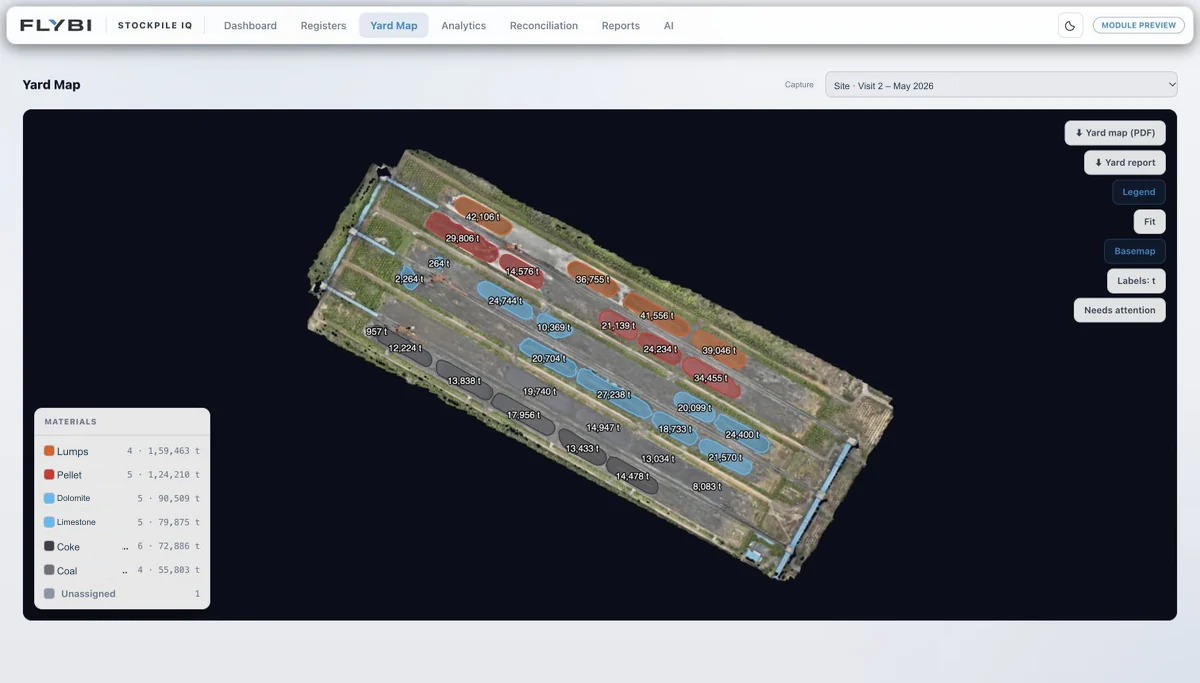
For Flybi, the useful direction is to connect field capture, review and the V7 delivery experience. The test is practical: can a client find the relevant site, understand the evidence and return to a useful record over successive visits?
Data retention, reuse and model training must follow the applicable client agreement, permissions and confidentiality requirements. A platform thesis does not create rights to reuse a customer’s information.
The five questions above are an evaluation framework, not a claim that every proposed capability is already deployed. Ask to see the actual workflow and the evidence behind it.
From understanding to action
Bring the question to your site.
Tell us what you need to measure, understand or review. We can help define the next step.